A refrigerator rarely fails all at once. It gives the warning signs for days or even weeks before you actually open the door and find warm milk and a fridge of spoiled leftovers, but most of the signs are minor details and things that can be easily written off as a minor quirk but they are actually signs that something much more serious has been happening mechanically underneath the surface.
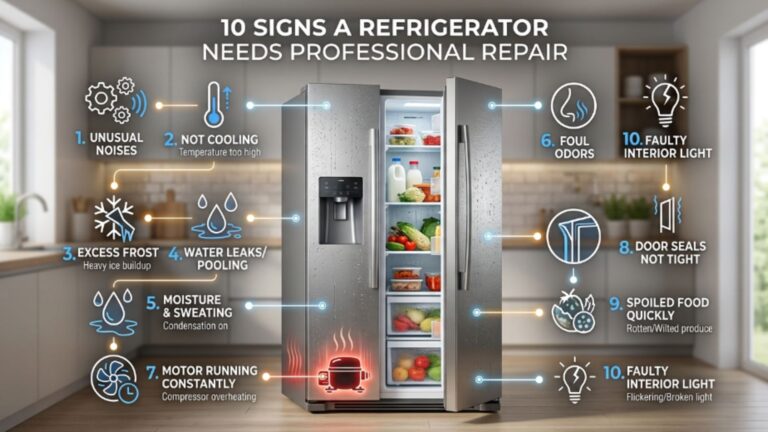
One thing that continues to show over the years after fixing refrigerators in homes and businesses is that the easiest and cheapest problem-solving remedies are for those customers who call at the first sign of trouble. Those who wait until the refrigerator no longer cools at all are almost always faced with a higher repair bill, a compressor replacement or a complete loss of food on top of that. The single greatest factor in a refrigerator issue being a $50 problem or a $500 problem is catching the signs early on. Here are the 10 warning signs indicating that it’s time to hire professionals before the situation worsens.
1. The Fridge Isn’t Cold Enough
If your food isn’t cold enough – if it’s cold but not as cold as it should be, or you see softness in some foods that should be firm – your refrigerator may not be maintaining the proper temperature. If your refrigerator isn’t holding steady at 40°F or lower or a freezer isn’t at 0°F, it may be caused by a compressor failure, refrigerant leak, or a thermostat problem. None of these resolve on their own, and all of them put your food safety at genuine risk the longer they go unaddressed. Bacteria can grow in dairy products, meat and leftovers long before they look or smell bad, if they are kept in a refrigerator that operates above a few degrees cooler than usual for days.
2. The Freezer Has Excessive Frost Buildup
The light frost is a normal phenomenon. If there is a heavy, uneven layer of ice on the walls, vents or coils in your freezer, this is a good indication that the defrost system is not working properly. This may be due to a defrost timer failure, a defrost heater failure or a defrost thermostat failure, and result in the automatic defrost cycle not operating as it should. If this is not corrected, excessive frost will impede air circulation even more, causing the cooling unit to have to work even harder over time and often cooling the refrigerator compartment as well.
3. Unusual Noises Coming From the Unit
If a refrigerator is working properly, it should hum steadily, with very little else in terms of sound. Any loud noises, such as buzzing, clicking, rattling or grinding sounds, are almost always indicative of a mechanical issue, possibly a failing compressor, a worn out evaporator fan motor or an in-house loose component. The sounds may become louder and occur more often as the problem worsens, and earlier detection, when the sounds are mild and occasional, more often means a much easier resolution and a much less costly resolution.
4. Water Pooling Underneath the Refrigerator
When water is pooling under your refrigerator, you should never overlook this as it could cause water damage to your floors, and it is usually caused due to a serious mechanical problem. More often than not, a clogged and/or frozen defrost drain or a broken water line (in models with an ice maker or water dispenser) or a failing door seal (allowing condensation to accumulate and drip out) will cause this. If not properly resolved, pooling water can cause mold to grow as well as continued damage to flooring and cabinetry.
5. The Motor Runs Constantly Without Cycling Off
Refrigerators are made to cycle on and off during the day, working periodically, not continuously. If you notice that the motor is running all the time or that it is running much more often than required to maintain the temperature, the unit is working too hard to maintain the temperature and is likely suffering from a refrigerant leak, a compressor failure or a problem with the condenser coils being too dirty or blocked to efficiently release heat. A refrigerator that won’t switch off and keep running will also cost a lot more on your electric bills, so this can be a symptom you’ll notice on your electricity bill first before you hear it.
6. Food Is Spoiling Faster Than It Should
When you see produce spoiling earlier, or dairy products are going bad before their use by date or even if it’s just that food does not stay as fresh as it used to, your refrigerator may not be providing the cold, even temperature environment that the food needs to stay in tip top shape even if it’s “cold” enough to look at. Even small temperature changes that may not cause noticeable differences from one day to the next can add up and cause spoilage. It’s usually the first and least obvious symptom of a potential issue and is easy to dismiss as poor fortune instead of a mechanical fault.

7. The Door Doesn’t Seal Properly
A leaky or damaged door seal (also known as a gasket) lets cold air out and warm air in, causing your refrigerator to run longer and harder to keep the temperature set. It’s possible to check this for yourself: slide a piece of paper in a door and try to get it back out. If it comes out with ease, and not resistance, then the seal probably needs to be addressed. A leaking seal is a minor problem among the problems listed here, but if it is not addressed it means that all of the other parts of the system are constantly filling in this leak, causing more wear on the higher-priced parts, especially the compressor, over time.
8. Visible Condensation Building Up Inside the Unit
A certain amount of condensation is normal especially immediately following the opening of the door. However, if the moisture continues to build up in the fridge or freezer compartment, then this can be caused by a door seal problem or an internal humidity control system problem or can be due to a blocked vent hole that stops air circulation. If left uncorrected, continued condensation can cause mold growth, and further reduce the unit’s capacity to maintain a stable, food-safe temperature.
9. The Exterior Feels Warm to the Touch
Yes, the sides and back of a fridge may be slightly warm as this is natural to release heat in the cooling system. If the heat is much hotter than normal, or if it smells like burning, these are more serious warning signs of excessive heat. While this might be an electrical problem or it could be a component working much harder than it should, it’s one of the symptoms on this list that you should not wait to see if it fixes itself it could cause a fire.
10. The Refrigerator Is Old and Increasingly Unreliable
The average life span of a refrigerator is 10-15 years. When your unit starts to fall into or out of that range, and you start to see more frequent problems, even if they appear unrelated to one another, it’s not a sign of one problem, but rather that several components are aging at the same time. At this stage, a professional assessment helps you understand whether continued repairs still make financial sense or whether you’re approaching the point where replacement is the more cost-effective long-term choice.
Why Addressing These Signs Early Matters
Refrigerator issues don’t typically remain limited to one part. A small leak in a door seal, if not taken care of, will cause the compressor to run more frequently, thus wearing out a much more expensive repair or replacement part. A small leak may be overlooked for a few weeks before the compressor fails completely, resulting in the choice of a replacement or a more expensive repair.
Seizing these early warning signs, no matter how insignificant or manageable they may seem, invariably results in less complicated and cheaper repairs and a longer life for your refrigerator. When the unit finally stops cooling, there is usually a larger issue, a higher cost and spoiled food in the refrigerator to boot.
Simple Habits That Help Prevent Repairs
There are some simple things you can do to make your refrigerator last longer between cleanings. Because dust buildup makes the compressor work harder, vacuum condenser coils every six months. Maintaining the food seal in the door is important for sealing the door tightly, and the food seal should be kept clean and free from food residues. Don’t over-stuff the fridge or warm areas will be left to let cold air flow around. Although none of these habits can be a substitute for professional maintenance, they do help to minimize the need for it.
What to Do If You’re Noticing These Signs
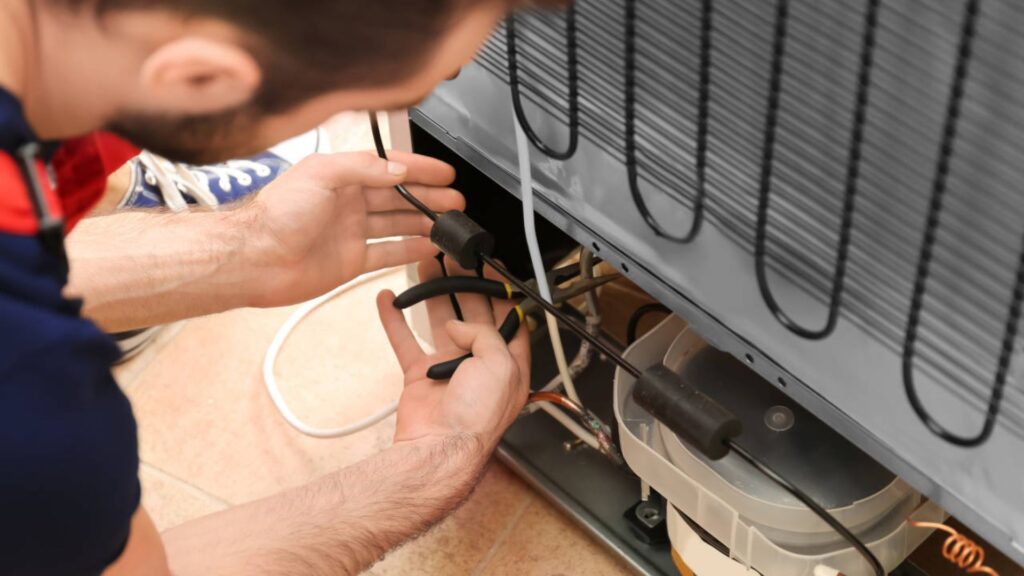
If your refrigerator displays any or all of these 10 tell-tale signs it’s time to take the next step, which is to call a professional to diagnose the problem, and avoid waiting for it to resolve over time or become more noticeable. A trained technician can determine the actual problem, as it could be something as simple as replacing the seal or something more complicated like a compressor problem and provide you with an honest assessment if repair or replacement is best for your situation.
With Carlos Refrigeration, refrigerator repair is a job for professionals, who can quickly and accurately diagnose problems and get your refrigerator back to reliably maintaining the safety and freshness of your food without ever having to guess.